
Taking a Look at Santa Again

It’s that time again – time for family, friends, festivities, and traditions. What would Christmas be without Santa? And what would Santa be without another fun Montessori discussion? Well, it’s a topic that seems to need some re-visiting.
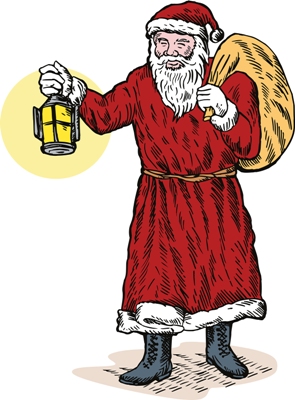
saint_nicholasAs many of you might remember, a few years ago I addressed the burning question about whether or not parents should tell their children the truth about Santa. Maria Montessori thought that telling kids about Santa and letting them believe he really exists was wrong, and would lead to doubt later on when they found out the truth. I personally feel somewhat similar, and have not told my kids that Santa is real or that gifts come from Santa.

I got lots of responses to that post, and they were mixed. Some people agreed with me, and others felt strongly that believing in Santa is a special part of childhood that adds to the magic of Christmas. In that post (which I recommend reading if you haven’t), I do give lots of examples of real-life stories you can share with your children about St. Nicholas and how many Christmas traditions began.

I wouldn’t have written on this topic again if I hadn’t received a comment from a hurting parent about this issue.

Here’s what happened: a teacher at a Montessori school told the kids, during class, that Santa wasn’t real. Understandably, parents were upset; one parent reacted by writing a blog post about it, and several people who read that blog post sent them a link to my first Santa post. The parent came by, shared their story, and then wrote this:

“My bottom line is this…since Montessori education starts with such young ages, Montessori schools ought to make that part of their philosophy known up front. The divulging of that kind of information should be left to the parents, and if they’re not going to leave it to parents, they should let the parents know at the outset.”

I have to say that even though I am not personally a fan of leading children to believe in Santa, this parent is absolutely 100% correct. It is not the place of a teacher or school director to tell children the truth about Santa if they don’t already know.

Parents as Primary Educators

At one of the Montessori schools where I worked, we had a parent handbook that we gave out whenever a new child was enrolled at our school. It shared the usual information, covering topics like discipline, absences, and expectations for parents and children. But on the very first page, in big letters, it said this:

“We believe in and support the responsibility of parents as the primary educators in their child’s life.”

I remember reading that quote many times and not quite getting it – remember, I didn’t have any children of my own at this time. I thought to myself, “But we’re the ones doing all the teaching – and in some cases, the kids spend more waking time at school than at home. How can the parents be the primary educators?”

It took me some time – and having two little ones of my own – to begin to understand. Even before birth, the parent(s) set the tone for the home; they choose the clothes, the toys, the food, the books. They are speaking and singing to the child, telling them stories and creating fun times.

But even more important, the parent truly is a model to the child of how to be human; the child learns about honesty, bravery, love, kindness, and all the other virtues by watching the parent. The lessons might sometimes be negative, but they are long-lasting and shape the child in profound ways.

If a child’s personality and temperament is truly set by age 5, as scientists say, then by the time the kids entered my elementary classroom, most of the work was done. Sure, I could help them learn and grow, but whatever they learned from me would pale in comparison to how much they learned from their parents.

The Role of Teachers and Parents

Teachers can share their thoughts with parents about many things. Indeed, parents often welcome it and even come to teachers for advice. Schools can and should have parent education nights; most parents want to know more about a variety of topics from a Montessori perspective.

No matter what the teachers share, though, the final decision about what happens in the home belongs to the parent. This is true whether the topic is discipline, nutrition, or family traditions. Not only is it not the teacher’s place to make decisions for the parents, but topics like these can be very personal for many parents, and they can sometimes find it hard to even listen to an opposing point of view. School staff needs to be sensitive.

Parents also have a responsibility. When their children attend a Montessori school, they should read books and magazines about Montessori, attend parent education nights, and ask teachers whenever they have a question or something isn’t clear. But even as they do that, they need to make decisions for their own families that sometimes might conflict with what their child’s teachers believe.

Be Prepared for Children to Find Out the Truth

Parents who choose to celebrate Christmas with Santa must be ready for the fact that their child could find out the truth at anytime. Hopefully, it won’t be from a teacher, but there’s not much you can do if a classmate, neighbor, or even older sibling decides to spill the beans. That’s often how many kids find out, and it can be a painful experience.

What you can do is be prepared; think about what you might say if your child comes running to you in tears, wondering if Santa is real or not. A little thought beforehand can help a great deal in times like those. Or, you might want to preemptively let your child know the truth about Santa once they reach a certain age, so that you can tell them sensitively before someone else does.

Some final thoughts: believing in Santa doesn’t increase a child’s imagination – after all, they’re not imagining him; they believe he’s real. I can see how it might increase excitement, but it doesn’t increase imagination. Not believing in Santa doesn’t mean that a child can’t be imaginative. Santa and imagination actually aren’t related, even though many people entangle the two.

Montessori Isn’t Anti-Imagination

I would also like to stress that Maria Montessori had absolutely nothing against imagination or children being imaginative. On the contrary, she understood that imagination (the ability to envision something not yet created) was one of the most powerful tools of the human mind.

She did, however, feel that children shouldn’t be introduced to fantasy until they had a firm grip on reality. This is probably one of her most misunderstood teachings whenever topics like this are discussed, so I’m going to say it again:

Maria Montessori and the Montessori method are not anti-imagination, and it is incorrect and misleading to say that they are.

I welcome more thoughts about this topic, and as always, all viewpoints are welcome. No matter what we believe, we can usually learn something from each other.

Subscribe to Comment Feed

15 Responses to “Taking a Look at Santa Again”

  • Theresa said at December 6th, 2009 at 3:23 pm :

    Hi Lori!
    I found this post very interesting.

    I totally agree that this is one area where parents have full authority. We do Santa here. If a teacher told my young child Santa is not real I would be very upset. It is a matter of respect for family and cultural traditions, and it isn’t just about Santa. There are beloved imaginary characters in many cultures and it is not a teacher’s business to dispute these traditions, but to respect them whether or not she agrees.

    I also agree with you that Maria Montessori was not anti-imagination. Anyone who has read any of the great lessons could see that’s not the case! I think she just saw her job as guiding children through their experience of the real world, helping them to see the beauty and mystery that exists all around us. She focused on developing the senses and the intellect, both of which which feed the imagination, and left the fantasy bit up to others. Nothing wrong with that!

  • Lori Bourne said at December 6th, 2009 at 4:28 pm :

    Hi, Theresa! Thanks for stopping by. Glad this post resonated with you. I agree that Santa falls under “cultural traditions” of which there are many. I know teachers have a tough job (I was one for many years!) so I don’t want to be too hard on them. It can be difficult – after all, they don’t want to intentionally lie to a child either.

    When I was a teacher (I think I mentioned this in the other post), I would guide discussions about Santa if the children brought it up – never bringing it up myself – and let them talk about it. It seemed to work pretty well.

    Great analysis of the “Montessori/imagination” conundrum too!

  • Christine said at December 6th, 2009 at 6:06 pm :

    As a teacher, I used to say, “yes, St. Nicholas was real.” I would share the real story about St. Nicholas (a real bishop). I’m not lying or telling fairy tale stories. Children never pressed the “issue,” and I never felt pressured to break the news or get into the reality of Santa Claus, reindeer, and rooftops.

  • aj said at December 7th, 2009 at 2:03 am :

    My 4.5 yo was recently out in public somewhere and was asked if he was “ready for Santa?” to which he replied “We don’t do the Santa thing…” then he was asked what grade he was in school (he is tall for his age) and he promptly answered, “We don’t do the school thing, either.” I was proud of him and we went on about our business.

  • Linda Cameron said at December 7th, 2009 at 5:13 am :

    In response to the question “Is Santa real?” from a child in my class, I always respond with “what do you think?”. They always answer “yes”, and happily run off.

  • Laura said at December 7th, 2009 at 8:32 am :

    My in-laws other extended family have always been horrified at me, but I have always said to my children when they press me on this topic: “Well, alot of people believe Santa is real, but I don’t. You get to choose what you believe, and that is okay with me.” Until they were older, they always chose to believe in Santa, and other people in my family made sure to carry on the fantasy with them.

    I have found this response works equally well with a lot of things. When my daughter announced she believed in reincarnation and asked if I did, I used the same line: “A lot of people believe that. I don’t, but you get to choose what you believe.” On that question, we spent some nice time researching religions in the world that believe in reincarnation. My daughter is still inclined to believe in it, regardless of what I believe.

    That is what I want for my kids.

  • Lori Bourne said at December 7th, 2009 at 11:16 am :

    Lots of interesting responses! Neat to see how everyone comes up with a different way of dealing with it. Actually I didn’t realize there were so many ways of doing or not doing Santa!

  • marti margrave said at December 7th, 2009 at 5:36 pm :

    When my own 2 (now adult) children were little, an older friend gave me this hint: Santa Claus is the spirit of anonymous giving. I think this is a truthful and appropriate answer and i’ve used it for years in my learning environments. This doesn’t negate any family’s tradition; it also allows for both “sides of the coin” to exist. Matter of fact, i’ve already used it this year…after all, ’tis the season!

  • Elizabeth White said at December 7th, 2009 at 6:44 pm :

    I agree with Maria Montessori’s view. However I also agree that it’s not the place of the teacher to pop the “Santa balloon”. With my own children (now grown) we all agreed that it was fun to pretend along with everyone else that he was real. Because of our Faith and the fact that the feast day of St. Nicholas is a big day for us, they were always familiar with the “real” St. Nicholas.

  • dawn said at December 8th, 2009 at 7:24 am :

    I am a montessori primary teacher and I agree that children should not be told that santa is real. I have so much respect for their human dignity that I make every effort to always tell them the truth. I wouldn’t “give it away” though, anymore than I would tell them that god isn’t real.

  • Laurakay said at December 8th, 2009 at 11:38 am :

    I made a decision at the outset to ‘consciously parent’. To me that meant thinking on and making a decision about things that are often taken for granted. Honesty is very important to my concept of integrity and it is important to me to model integrity for my children. I chose to be truthful with them.

    We had fun with Santa, Rudolph, Elves and Frosty the Snowman at Christmas. My daughters didn’t lack for imaginative play because they knew that Santa was pretend. They had fun with the Santa tradition and never had to deal with the effects of finding out the “truth”. Another problem with Santa as real is regarding the fear that some children have that someone would be able to sneak into their house while they and their parents are sleeping.

    Part of teaching the girls to be polite and considerate of others feelings was to include that it would be unkind to ‘rain on the parade’ of a child who had been told that Santa was real. If a child asked them they were allowed to tell the child that they don’t believe in Santa, but it would be best to walk away or change the subject. They could talk with me about it at home if they wanted.

    In regard to teachers, I agree with ‘dawn’, Santa isn’t a religious belief. This isn’t the same situation as with religion. Of course a teacher shouldn’t tell a child that God isn’t real or espouse their own religious beliefs. I think parents should look at their views on religion and consider whether or not they are using Santa in a way that is confusing to their child.

    My daughters are both in college and have expressed their appreciation many times over the years for the way this was handled in our family. Santa, the Tooth Fairy, the Easter Bunny, etc., are characters in stories. Playing with them as story characters didn’t detract from being imaginative and having fun.

  • Colleen said at December 8th, 2009 at 11:57 am :

    As far as the whole Santa debate, we just really don’t make a big issue out of it.
    My sons have always been afraid of strange characters, whether the character is Santa, Mickey Mouse, or anyone else. They seem to lump the notion of Santa into that category…so we have never really gotten into much about Santa.
    We do discuss St. Nicholas, much as we talk about other traditions around the world in December.
    Both of my sons, ages 6 and 3, enjoy wearing Santa hats and like to wear them when we decorate the tree or are decorating cookies or wrapping presents.
    They enjoy singing Christmas carols and if the song happens to be one about Santa or Rudolph, they sing it and enjoy the tune more so than dwelling on the whole concept of the characters in the song.
    We do have some Santa ornaments on our tree. Most of these were given to us as presents.
    But in addition to having Santa, we have other characters, such as teddy bears in Christmas clothes and so on…
    Generally, we focus more on the Nativity. We have a Bethlehem Village set up in our home, as well as several different Nativity displays.
    We are using a cute, age appropriate book called My First Countdown to Christmas by Dr. Mary Manz Simon and we do most of the Christmas activities from the book, although I tweak them a bit to work a little better in a Montessori inspired homeschool environment.
    If I was still in the classroom environment, I would not tell a child that there is not a person such as Santa, or for that matter, not would I break the news on other make-believe characters such as the tooth fairy and so forth…to me, that is up to parents to explain to their own children. Since I am now a homeschooling mom, it is easier for me to explain things as they arise in a way that is in line with our family’s philosophy.

  • Rocio Smith said at December 8th, 2009 at 12:32 pm :

    I would have to agree with the angry parent. It is not our job as educators to be judgemental, nor to decide what children should know the truth about or not. Our job is to educate from an EDUCATIONAL point of view, therefore, relying on facts and not on personal beliefs.
    Santa and other holiday celebrations can/should be presented as any other subject – with objectivity.
    I always tell my students to ask their parents when I feel it is not place to say either way with topics such as religion, sexual topics, Santa, Easter Bunny, etc.

  • MMS said at December 9th, 2009 at 6:14 pm :

    My daughter’s father and I differed on how to “handle” Christmas and the Santa issue. I always (a word that I seldom use) began a conversation about Santa with the preface. “Well, the story goes……” or “They say…….”, or “Some people believe…..” During the holiday season, I would read to her about how “Christmas” was observed in other countries. Her dad, on the other hand, took the opposite stance about such things. The Christmas following her fifth birthday in August, she had a heart-to-heart with me, confiding in me that she “knew” there was no such person as Santa, but, did her dad know the truth.

    It was a priceless moment. I guess you could say that, for her, it was just another fact of life.

  • Mechtild said at December 11th, 2009 at 9:17 pm :

    Interesting how everyone deals with this issue. I think a lot depends on our own experiences in childhood. I spent my childhood in the Netherlands and have fantastic memories about St Nicolas celebration. Many years ago we revealed to our 7 yo son in October that St Nicolas was not real. He understood and asked questions about that, but when Dec came he really believed again. When the question of real or not real comes up in my classroom I say often, he is as real as you want him to be. I notice that some children believe no matter what I say or do. the last 3 years I have brought St Nicolas into my classroom. I talk about who he is, where he lived and what my experiences were as a child. I throw a red cloth around my shoulders and make a mitre for my head, a stick (staff) in my hand and read from a ‘red book’ (encyclopedia) and make up some positive and encouraging things to say for each child. They get a biscuit and then I throw some special biscuits around. This year I asked one of the 6 year olds to be Pete, made a headpiece, a piece of material around her shoulder and a sack in her hand with the biscuits. She had never heard of St NIc or Pete before, but she played her part magnificently. The children in my class are 6-11yo. When we came in, their faces were priceless. Afterwards when I came back into the class they were still discussing whether this was all real or not. I thought it was very interesting that something that is so obviously not real, can still be so real for a child. Even the girl who played Pete went home and told her mum with conviction that St Nicolas came to school.

    The children enjoy this little tradition and look forward to it.

Leave a Reply